Thursday, May 18, 2017

The Best Man
by Richard Peck
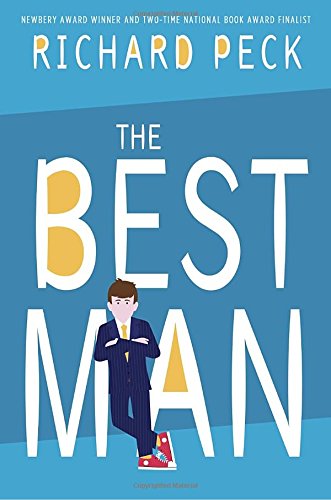
Image result for richard peck best man

Peck. R. (2016).  The best man.  New York, NY: Dial Books for Young Readers.

     Archer is the best man in his uncle's wedding, who just happens to be marrying his new student teacher; another man. Of course before he can tell this story, he has to take you back to the first wedding he was in... where he ripped his pants, had to walk down the aisle exposing his bottom, and met his very best friend Lynette.  Archer recounts his years in elementary school through a humorous narrative that all students will be able to relate to.  There are the bullies, the teachers (both the great and not so much), the student from another country, oh, and the incident that brought out the SWAT team and local news media.  The story progresses through the sixth grade, which used to be part of the elementary school, but has now been moved into the high school.  We see much of the expected; growth spurts, attitude changes, and questioning of the kind of person they want to be.  This Texas Bluebonnet Award Nominee would be most enjoyed by students in grades 4-6.


Saturday, March 18, 2017

Rodeo Red 
by Maripat Perkins


cover_image


Perkins, M. (2015). Rodeo Red. Atlanta, GA: Peachtree.

Rodeo Red and her best friend Rusty, a stuffed hound dog, are living the good life until the arrival of Sideswiping Slim, a new baby brother.  Despite the fact that this "scallywag" does nothing but holler, destroy her things and even steals her beloved Rusty, her parents (the Sheriff and her Deputy) seem "smitten."  When her "city slicker" of an aunt sends her a belated birthday gift, "some sort of varnished varmint" (stuffed cat), she comes up with a plan to outwit her new brother and get her best friend back.

The highlight of this text describing the age old issue of sibling rivalry has to be Perkins’ extensive use of language that seems to come from straight out of the old west.  When punished for trying to retrieve her toy from her baby brother, her mother, “dropped me into a holding cell quicker than you could say lickety-split.  I was madder than a bee in a Sunday bonnet.”

Molly Idle does a great job of combining all the visual elements to convey an image that blends reality with Red’s imagination.  She uses soft, rounded lines and muted pastel colors to add some old west flavor, such as Red’s cowgirl hat, the saloon style doors in the home and even small touches like the sheriff’s badge adorning the mother’s neckline and father’s cuffs. 


Saturday, March 4, 2017

This is Not My Hat 
by Jon Klassen


Klassen, J. (2012). This is Not My Hat. Boston, MA: Candlewick Press.

Little fish is excited because he has a hat and it fits just right. Unfortunately the hat does not belong to him. It belongs to a much bigger fish who had it stolen right off his head! Unbeknownst to little fish who thinks he is getting away unnoticed, the hat's owner is on his trail. When the witness who said he wouldn't tell spills the beans, things don't turn out quite the way little fish had hoped.

With very basic and minimal text, much of the humor of the story is told through the illustrations, such as in the big fish’s eyes and the crab pointing the way to the culprit.  Though the ending is not specifically stated in the text, the reader is left to infer the outcome based on the pictures.  


The dominant shape in This is Not My Hat is the oval.  Used to not only represent the main characters of big and little fish, ovals are also used to illustrate the underwater setting’s plants throughout the story.  This is significant in that little fish believes he can hide and will be safe in the tall plants.  The shape of the larger fishes’ eye is very telling as well, as you really gain a sense of his thoughts and emotions through even the slightest change in its shape and direction.

Book Trailer for This is Not My Hat

My Teacher is a Monster! 
by Peter Brown


Brown, P. (2014). My Teacher is a Monster! New York, NY: Little, Brown and Company. 

She roars, she stomps, she keeps children in from recess; Bobby's teacher is a real monster.  One Saturday as Bobby is happily going along to his favorite spot in the park, he finds a terrible surprise... Ms. Kirby is at the park!  He feels trapped, what should he do?  He can't run away.  As Bobby forces himself to sit down and make small talk with his teacher, a gust of wind carries off Ms. Kirby's hat and he comes to the rescue.  What happens next is beautiful as teacher and student spend a bit of time together, and Bobby comes to see his teacher as a real person and not necessarily the monster he thought she was.  But honestly, don't we all have a little monster in us?

A student thinking their teacher is a monster is not exactly a new idea.  Teachers have to raise their voices and correct misbehavior and sometimes to children that can come across as “monstrous.”  However, when Bobby accidentally runs into his teacher, Ms. Kirby, in the park and they spend some real time together outside of class, he begins to see her more than just a disciplinarian and “monster”.  The theme of getting to know a person before passing judgment on them is strong and Brown does a terrific job of illustrating how Bobby’s perception of his teacher changes when she goes from an actual green monster to a real person.  

In My Teacher is a Monster, Brown creatively uses shapes to illustrate Bobby’s view of his teacher.  As the story begins Ms. Kirby is depicted as the monster Bobby sees her as, with a large awkwardly shaped green head, big circular nostrils, and sharp, pointy triangular shaped teeth and claws.  As the story progresses and Bobby comes to know his teacher on a more personal level, we see her features begin to soften and round out until eventually she takes on the same shapes and coloring as the children in the story.


My Teacher is a Monster! Read Aloud

Saturday, February 11, 2017

Princess Labelmaker to the Rescue:
An Oragami Yoda Book
by Tom Angleberger


Angleberger, T. (2014). Princess Labelmaker to the rescue: An oragami Yoda book. New York, NY: Amulet Books.

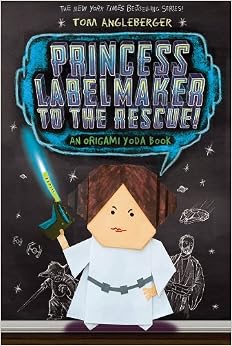
The perfect book to go along with the recent hot topic discussion about standardized testing and “teaching to the test”.  Forced to participate in ‘FunTime’, a test prep video series with “cool” (lame) songs such as Oppa Funtime Style, a take on Gangam Style with Professor FunTime and his talking calculator, Gizmo, the students at McQuarrie Middle School are fed up. They have had all their fun extracurriculars taken away as the district shells out thousands on this FunTime program that the students hate.  The Rebel alliance has decided that as a whole they will do poorly on the test, actually they will barely pass so as not to be retained, to bring down the scores of the school to protest this new program.  The students are in for a surprise when the principal, Mrs. Rabbski, receives the case files and while they fear they will be in trouble, she actually sides with the students and backs them against the school board refusing to utilize the program at the school any longer.  Using origami Star Wars characters and phrases straight out of the movie, this book is sure to be a big hit with middle grade Star Wars fans.  

The Crossover by Kwame Alexander

cover_image

Alexander, K. (2014). The crossover. New York, NY: Houghton Mifflin Harcourt.

Twelve-year-old Josh Bell, aka Filthy McNasty, is a basketball phenom.  He aims to be the next Kevin Durant or LeBron James.  His twin brother Jordan is just as good and idolizes another great, Michael Jordan.  The boys inherited their love of the game from the father, a former professional basketball player, Chuck “Da Man” Bell.  Everything is going great, the team is on their way to the championship and it seems that these boys just cannot be stopped.  Then a new girl in school catches Jordan’s attention and leaves Josh feeling more alone than ever.  As if that wasn’t enough, mom seems very concerned about their father’s health and the boys are starting to wonder if maybe they should be worried.  This story of family relationships, sibling dynamics and middle school drama is brilliantly told in a poetic form that upper elementary students and middle schoolers will not want to put down.  A great recommendation for reluctant readers!

In addition to family relationships the overriding theme of this story is basketball.  It’s what the men in this family live for.  If they’re not out on the court destroying other middle school teams, they’re shooting free throws in the driveway or hanging out at the rec center organizing games.  Alexander even uses the structure of basketball to divide the story into “quarters” rather than chapters and delivers life lessons in the form of “basketball rules.”  Novel-in-verse is the style of this book and Alexander does an amazing job of weaving in all the excitement of game play-by-plays to Josh’s inner struggles with his life and family in a form that is pure poetry in motion.


Time for Kids Interview with Kwame Alexander

Sunday, January 15, 2017

The Snowy Day
by Ezra Jack Keats

Image result for The Snowy Day

Keats, E. J. (1962). The snowy day. New York, NY: The Viking Press.

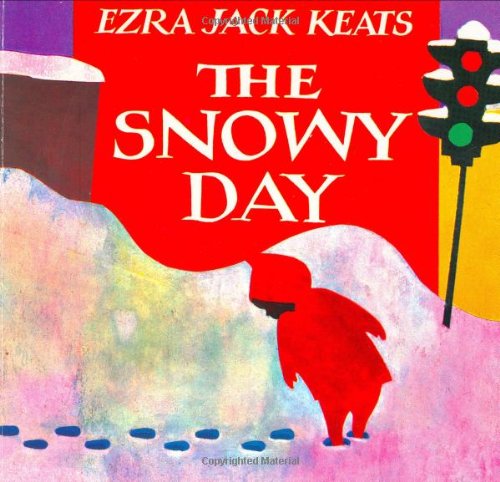
          Young Peter awakes one morning to find that snow had fallen while he slept and now covers everything as far as he can see.  After eating breakfast, he throws on his snowsuit and runs outside to discover that snow is piled up very high along the street.  As he walks along the snow he tries making different patterns with his feet and then with a stick he finds.  He smacks snow covered trees, makes a snowman and snow angels, and contemplates joining in a snowball fight with older boys.  He is a typical young boy doing all the things any young child would do when they awaken to the first snow fall.  He pretends to be a mountain climber, then slides down.  He gathers up some snow and packs it tight to save in his pocket for tomorrow.  Then Peter goes in, takes off his wet clothes and takes a nice warm bath while telling his mom all about his adventures of the day.  Before bed that night, Peter sadly discovers that his snowball is no longer in his pocket; only a large wet spot remains.  That night Peter dreams of the sun shining in the sky, melting away all the snow.  However when he wakes the next morning, he finds there is even more snow falling, and he ventures out again, this time with a friend, to have new adventures.  This Caldecott Honor book would be the perfect addition to a K-1 unit study on Winter or an author study on Ezra Jack Keats.


Ezra Jack Keats Foundation