Saturday, March 4, 2017

My Teacher is a Monster! 
by Peter Brown


Brown, P. (2014). My Teacher is a Monster! New York, NY: Little, Brown and Company. 

She roars, she stomps, she keeps children in from recess; Bobby's teacher is a real monster.  One Saturday as Bobby is happily going along to his favorite spot in the park, he finds a terrible surprise... Ms. Kirby is at the park!  He feels trapped, what should he do?  He can't run away.  As Bobby forces himself to sit down and make small talk with his teacher, a gust of wind carries off Ms. Kirby's hat and he comes to the rescue.  What happens next is beautiful as teacher and student spend a bit of time together, and Bobby comes to see his teacher as a real person and not necessarily the monster he thought she was.  But honestly, don't we all have a little monster in us?

A student thinking their teacher is a monster is not exactly a new idea.  Teachers have to raise their voices and correct misbehavior and sometimes to children that can come across as “monstrous.”  However, when Bobby accidentally runs into his teacher, Ms. Kirby, in the park and they spend some real time together outside of class, he begins to see her more than just a disciplinarian and “monster”.  The theme of getting to know a person before passing judgment on them is strong and Brown does a terrific job of illustrating how Bobby’s perception of his teacher changes when she goes from an actual green monster to a real person.  

In My Teacher is a Monster, Brown creatively uses shapes to illustrate Bobby’s view of his teacher.  As the story begins Ms. Kirby is depicted as the monster Bobby sees her as, with a large awkwardly shaped green head, big circular nostrils, and sharp, pointy triangular shaped teeth and claws.  As the story progresses and Bobby comes to know his teacher on a more personal level, we see her features begin to soften and round out until eventually she takes on the same shapes and coloring as the children in the story.


My Teacher is a Monster! Read Aloud

Saturday, February 11, 2017

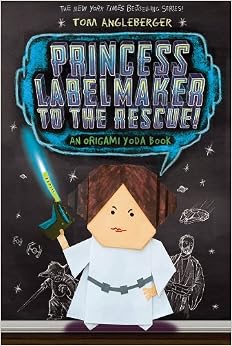
Princess Labelmaker to the Rescue:
An Oragami Yoda Book
by Tom Angleberger


Angleberger, T. (2014). Princess Labelmaker to the rescue: An oragami Yoda book. New York, NY: Amulet Books.

The perfect book to go along with the recent hot topic discussion about standardized testing and “teaching to the test”.  Forced to participate in ‘FunTime’, a test prep video series with “cool” (lame) songs such as Oppa Funtime Style, a take on Gangam Style with Professor FunTime and his talking calculator, Gizmo, the students at McQuarrie Middle School are fed up. They have had all their fun extracurriculars taken away as the district shells out thousands on this FunTime program that the students hate.  The Rebel alliance has decided that as a whole they will do poorly on the test, actually they will barely pass so as not to be retained, to bring down the scores of the school to protest this new program.  The students are in for a surprise when the principal, Mrs. Rabbski, receives the case files and while they fear they will be in trouble, she actually sides with the students and backs them against the school board refusing to utilize the program at the school any longer.  Using origami Star Wars characters and phrases straight out of the movie, this book is sure to be a big hit with middle grade Star Wars fans.  

The Crossover by Kwame Alexander

cover_image

Alexander, K. (2014). The crossover. New York, NY: Houghton Mifflin Harcourt.

Twelve-year-old Josh Bell, aka Filthy McNasty, is a basketball phenom.  He aims to be the next Kevin Durant or LeBron James.  His twin brother Jordan is just as good and idolizes another great, Michael Jordan.  The boys inherited their love of the game from the father, a former professional basketball player, Chuck “Da Man” Bell.  Everything is going great, the team is on their way to the championship and it seems that these boys just cannot be stopped.  Then a new girl in school catches Jordan’s attention and leaves Josh feeling more alone than ever.  As if that wasn’t enough, mom seems very concerned about their father’s health and the boys are starting to wonder if maybe they should be worried.  This story of family relationships, sibling dynamics and middle school drama is brilliantly told in a poetic form that upper elementary students and middle schoolers will not want to put down.  A great recommendation for reluctant readers!

In addition to family relationships the overriding theme of this story is basketball.  It’s what the men in this family live for.  If they’re not out on the court destroying other middle school teams, they’re shooting free throws in the driveway or hanging out at the rec center organizing games.  Alexander even uses the structure of basketball to divide the story into “quarters” rather than chapters and delivers life lessons in the form of “basketball rules.”  Novel-in-verse is the style of this book and Alexander does an amazing job of weaving in all the excitement of game play-by-plays to Josh’s inner struggles with his life and family in a form that is pure poetry in motion.


Time for Kids Interview with Kwame Alexander

Sunday, January 15, 2017

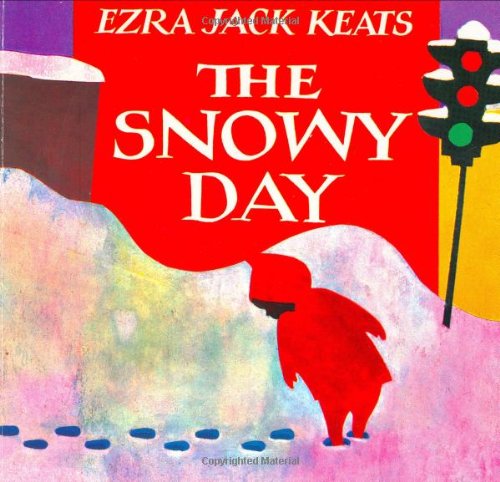
The Snowy Day
by Ezra Jack Keats

Image result for The Snowy Day

Keats, E. J. (1962). The snowy day. New York, NY: The Viking Press.

          Young Peter awakes one morning to find that snow had fallen while he slept and now covers everything as far as he can see.  After eating breakfast, he throws on his snowsuit and runs outside to discover that snow is piled up very high along the street.  As he walks along the snow he tries making different patterns with his feet and then with a stick he finds.  He smacks snow covered trees, makes a snowman and snow angels, and contemplates joining in a snowball fight with older boys.  He is a typical young boy doing all the things any young child would do when they awaken to the first snow fall.  He pretends to be a mountain climber, then slides down.  He gathers up some snow and packs it tight to save in his pocket for tomorrow.  Then Peter goes in, takes off his wet clothes and takes a nice warm bath while telling his mom all about his adventures of the day.  Before bed that night, Peter sadly discovers that his snowball is no longer in his pocket; only a large wet spot remains.  That night Peter dreams of the sun shining in the sky, melting away all the snow.  However when he wakes the next morning, he finds there is even more snow falling, and he ventures out again, this time with a friend, to have new adventures.  This Caldecott Honor book would be the perfect addition to a K-1 unit study on Winter or an author study on Ezra Jack Keats.


Ezra Jack Keats Foundation

Tuesday, January 10, 2017

The Bad Guys
by Aaron Blabey

Image result for The bad guys aaron blabey

Blabey, A. (2015). The bad guys.  New York, NY: Scholastic Press.

          Mr. Wolf might have a long rap sheet of bad deeds including blowing down houses and attempting to eat old women and their granddaughters, but that doesn't mean he's a bad guy!  Everything you've heard up until now has been a lie.  He really is a NICE guy.  And it's not just him...he has a few friends who also have undeserved reputations and have been unjustly labeled as "Bad Guys."  They include Mr. Snake, Mr. Piranha and Mr. Shark.  Forget the fact that they just want to eat everyone, because Mr. Wolf has a brilliant plan.  No longer will they be the villains, eliciting screams and fear from those they meet.  As of today, these 4 friends are now known as the "Good Guys Club."  They'll drive around in their wicked cool car, rescuing kitties from trees and dogs from the pound.  They'll be heroes!   Even reluctant readers will delight in the friends' humorous dialog and antics in this first book of a brand new graphic novel series from author-illustrator Aaron Blabey, author of the Pig the Pug series.  Recommended for students in grades 1-3, but enjoyable for all ages!


Book Trailer for The Bad Guys

Sunday, January 1, 2017

The Last Kids on Earth
by Max Brallier

Image result for last kids on earth

Brallier, M. (2015.) The last kids on earth. New York, NY: Scholastic Inc.

Jack Sullivan was pretty much your typical 13 year old boy.  Well except the fact that he was technically an orphan and bounced around from foster home to foster home most of his life.  But 42 days ago when the monster apocalypse hit, his foster family hightailed it west looking for safety and left him behind to fend for himself.  So what is a boy to do all on his own in a town swarming with gigantic monsters and former inhabitants that have been zombified?  Well for starters he takes refuge in his "scummy little foster" brother's tree house and after some major additions has the place better defended than Fort Knox.  Now that he's feeling a little more secure, he's decided to seek out his best friend, Quint, who he hasn't seen since the day the monsters first struck.  Thankfully he does finally reunite with Quint, as well as Dirk, the resident bully who never passed up a chance to give Jack and Quint a hard time.  Of course every true hero must rescue his "damsel in distress" and Jack is no different.  Jack has his sights set on June Del Toro, editor of the school paper and his current love interest.  The last time he saw her was also the first day of the apocalypse where they locked eyes and then she disappeared into the school.  With Quint and Dirk's help, he is determined to save the love of his life, but as it turns out June is more than capable of taking care of herself.  With the giant monster Blarg hot on Jack's trail and every zombie in town surrounding the school, the 4 teens will have to work together to escape and make it back to the ultra fortified tree house.  Douglas Holgate's black and white comic type illustrations not only bring the characters to life, but add much humor to the story.  This book will be a big hit with students in grades 4-6 and is a great recommendation for reluctant readers.  It is also on the list of Bluebonnet Nominees for 2017-2018.


Last Kids On Earth Book Trailer

Sunday, November 13, 2016

Podcasts in Schools

           Honestly, before beginning my library science courses just a year ago, I had only heard the term "Podcast" but had no idea what it was.  When reviewing the syllabus for my first course, I learned that we were going to be creating our own Podcast and I was actually pretty terrified.  It turns out that podcasting is simply the ability to create or listen to audio content either live or downloaded for later use (Wikispaces, 2012).  There, that doesn't sound so scary, does it?  Well maybe still a little if you have no idea how to begin.  Lucky for you there are some really easy, and more importantly FREE, tools available online for you and your students to create your own podcasts.

Image result for soundcloud

          The first podcasting site I tested out was SoundCloud.  It is very easy to sign up simply by linking to your Facebook account.  I only signed up for the free account which allows you 180 minutes of upload time, but there are also options for a Pro account for $7/month which doubles that time and includes advanced features, or even the ProUnlimited account for $15/month which allows you unlimited upload time.  I simply clicked the Upload button and was given a choice to upload a file or begin a new recording.  When you click the record button it will ask you for access to your camera and microphone.  Once you click allow, make sure you are ready to begin before pressing the record button because it starts fast.  Of course if you make a mistake, there is a button to start over thank goodness.  I suggest having a script because if not you may be starting over MANY times like me!  Once you are happy with your recording you can upload it, give it a name and description and choose whether to make it public or private. Overall, SoundCloud was very easy to use, even for a beginner.

Image result for audioboom

          Signing up for AudioBoom was quick and easy, just create a user name, give your email address and create a password and your in. Or so I thought...Then I was taken to the next page that asked for my name, email, link to my current podcast, a name for my podcast, the country, the category, a description...oh gosh, when can I just record something?  Then I get to the next page and it dawns on me, I'm not exactly signing up, I'm basically applying to sign up!  After entering all that information I am taken to a screen that says they will review my information and if they feel I am a good fit they will be in touch.  So I can listen to other podcasts, but to create my own I need to be approved apparently.  In the mean time I can set up my profile and adjust my settings.  This has been a disappointment when all I really wanted to do is record my own podcast.  If your goal is just to listen to other podcasts then I guess this would be an okay site.  Otherwise you need to plan ahead and get preapproved before being able to record anything here.

Image result for podomatic
          PodOmatic is another podcasting site that is easy to sign up for using your Facebook account. Then you are given a choice to sign up for the Free Basic account with 500 MB of storage, or the Pro account which runs around $120, but with a two month discount I was offered would have been only $100.  Right away at the top of my home screen I noticed a button that said Create a Podcast, so I clicked there assuming this was going to be easy.  Only there is no record button of any kind, only the option to add and upload a file.  So I had to open up my voice recorder and record my podcast, then upload that file into PodOmatic.  Gave it a name and a description and then hit publish.  It was fairly easy once I figured out what I needed to do, but maybe not so much for a student or someone brand new to podcasting.

          Out of the three sites I explored, I have to say that SoundCloud was my hands down favorite.  It was the easiest of the three for me to use and I believe students and teachers would feel the same way when trying to utilize any of these sites in a classroom or library.  Here is the podcast I created using SoundCloud (I'm kinda sick right now, so please excuse my voice)...


          With the huge emphasis placed on differentiating instruction in recent years, podcasting is an excellent way to offer remedial or extended support for those in need, or an extra challenge for more advanced students.  It's also a fantastic way to enhance instruction for those students who are auditory learners.  Not only can students listen to gain information and knowledge, but they can also be creators of information recording their own podcast; discussing research, books they have read, conducting interviews, etc.  Teachers and librarians can also use podcasts as a way to share information with students, staff and parents about upcoming projects, events, trainings,and programs.  These are just a few of the endless ways to incorporate podcast into your classroom or library.

Resources

Eash, E.K. (2006). Podcasting 101 for K-12 Librarians. Information Today, Inc. 
          Retrieved November 12, 2016 from
          http://www.infotoday.com/cilmag/apr06/Eash.shtml

Wikispaces. (Last Revision 2012). Podcasting in Education. Wikispaces. Retrieved
          November 12, 2016 from
          http://podcasting-in-education.wikispaces.com/#x-Finding%20Podcasts